Pechino
At a Glance·城市印象
Dove gli imperatori regnavano e la Grande Muraglia incontra il cielo
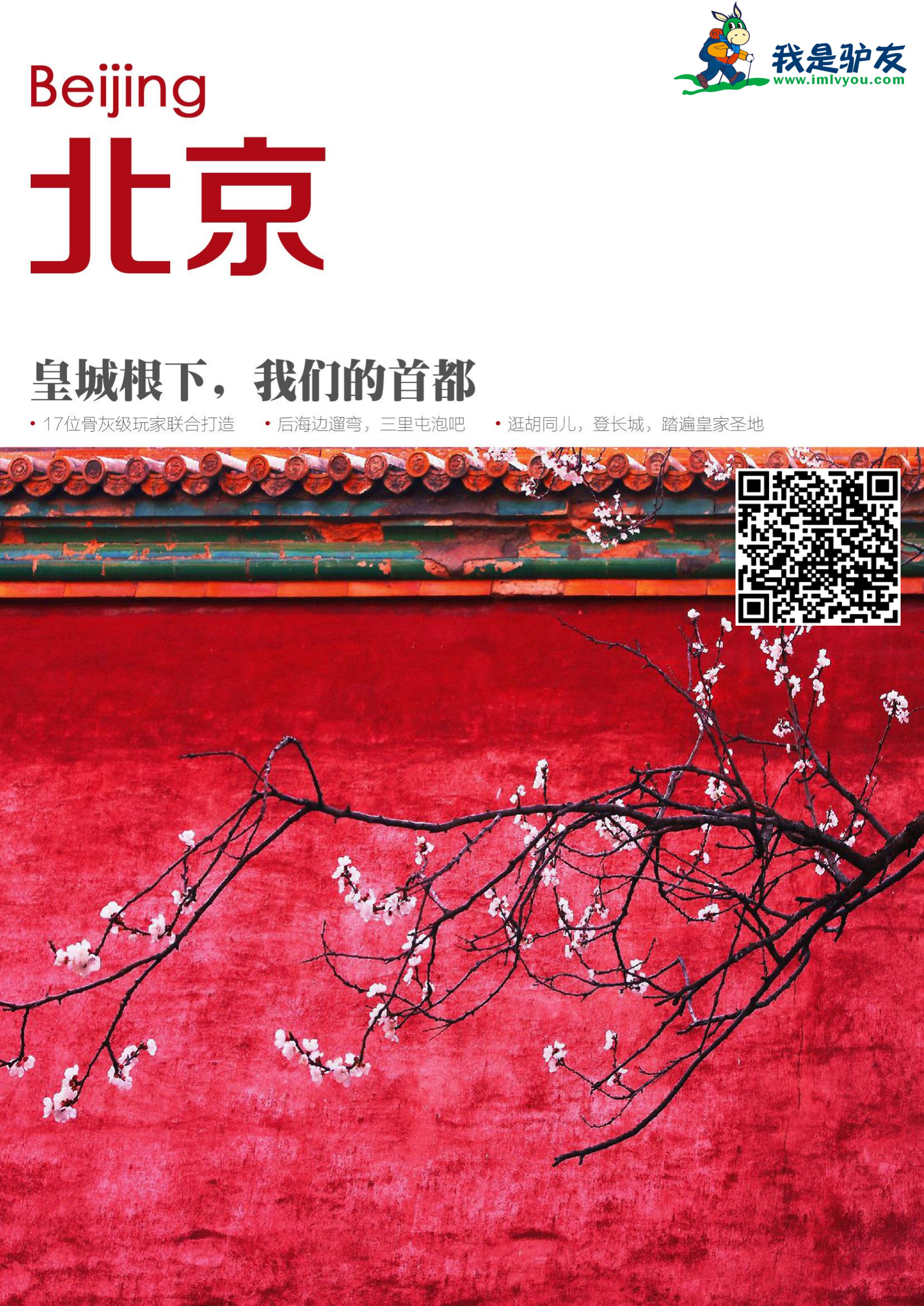
Pechino è la capitale della Cina e il suo cuore politico, culturale e storico, con oltre 3.000 anni di storia urbana e più di 850 da capitale imperiale. Sopra lo splendore di Jin, Yuan, Ming e Qing si stratificano gli hutong, la Grande Muraglia e una scena culinaria un tempo votata la migliore della Cina continentale. Per quanto a lungo restiate, la città avrà sempre un segreto in più da svelare.
Attractions·必游景点
Le icone e gli angoli nascosti che definiscono Pechino
The Forbidden City
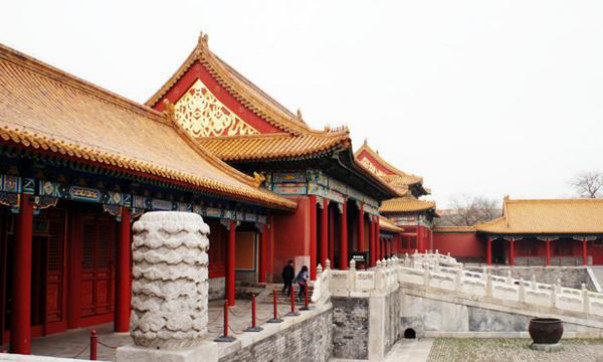
The legendary Forbidden City — palace of 24 Ming and Qing emperors and the world's largest surviving wooden palace complex. Four gates enclose a sea of crimson-walled, yellow-tiled halls where centuries of court intrigue played out. Walk the central axis (about 3 hours), entering through the Meridian Gate (south) and exiting via the Gate of Divine Might (north). Open 8:30-16:10 peak season, 8:30-15:40 off-peak. Book e-tickets in advance and bring snacks — food inside is limited.
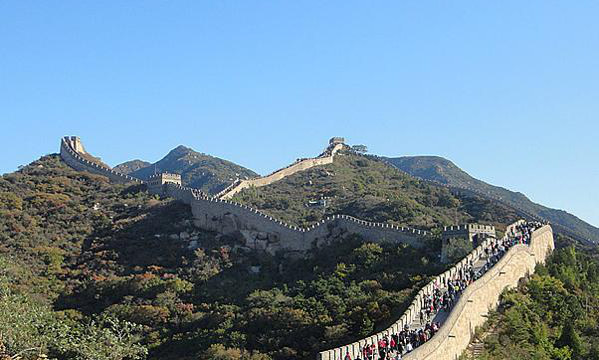
Great Wall at Badaling
The best-preserved section of the Ming Great Wall — and the one Chairman Mao meant when he said 'you are no hero until you've climbed the Great Wall.' Its early fame means big crowds ('everywhere you look: people, people, people'), so arrive early. Take bus 877 from Deshengmen (¥12 air-con, ¥7 regular; 6:00-17:00, every 5 minutes). For a quieter, steeper alternative, head to Mutianyu in Huairou — the PDF's pick for the multi-day deep tour.
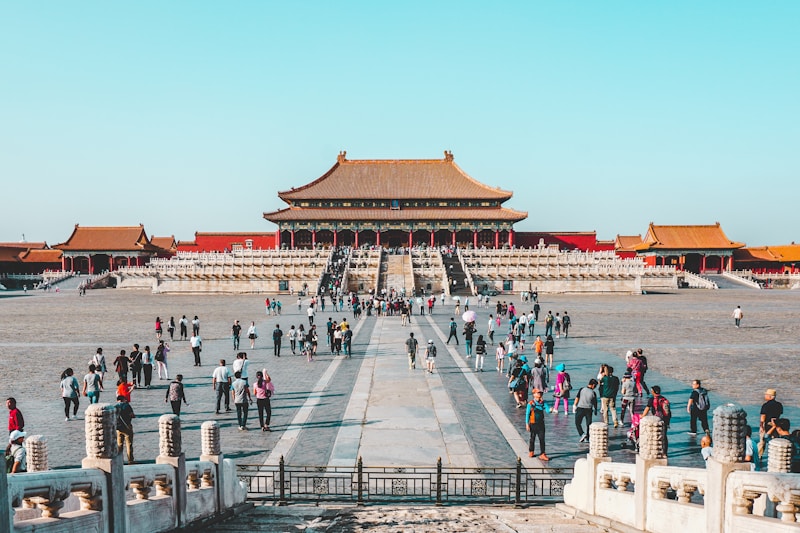
Temple of Heaven
The altar of heaven where Ming and Qing emperors came on the winter solstice to pray to the heavenly god — four times the size of the Forbidden City. Its '回'-shaped layout symbolizes 'round heaven, square earth.' Don't miss the Echo Wall: two people standing against the eastern and western halls can whisper and be heard 100 meters away, the sound rippling along the wall. Gates open 6:00-22:00, inner sights from 8:00. Come at dawn to watch locals do tai chi.
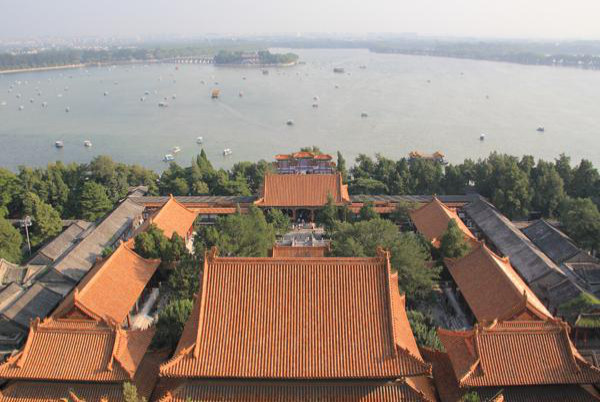
Summer Palace
China's largest and best-preserved imperial garden, centered on the 41-meter Tower of Buddhist Incense atop Longevity Hill. The 728-meter Long Corridor — a painted gallery linking pavilions, halls, and towers — stitches the buildings, green hills, and blue Kunming Lake into a composition rare in the history of world garden art. Open 6:30-18:00 peak season, 7:00-17:00 off-peak. Metro Line 4 to Beigongmen; pair it with the Old Summer Palace ruins next door.

Tiananmen Square
The world's largest city-center square, flanked by the Monument to the People's Heroes, the Great Hall of the People, and Chairman Mao Memorial Hall. The daily flag-raising at dawn is unforgettable — 36 honor guards march out of Tiananmen's central arch to 'Ode to the Motherland' and raise the flag under the eyes of the crowd. Flag-raising time shifts with the sunrise every day, so check the schedule the night before and arrive early.
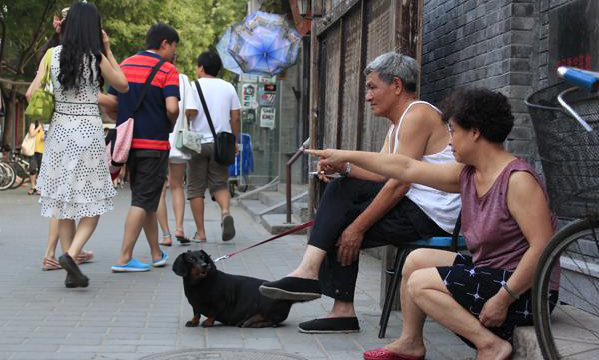
Nanluoguxiang Hutongs
Beijing's most famous hutong street, flanked by eight symmetric alleyways hiding surprises like the Central Academy of Drama, the childhood home of the last Empress Wan Rong, and writer Mao Dun's former residence. The lanes are packed with boutique shops, creative cafés, and bars that are quieter and more domestic than Sanlitun or Houhai — 'in the city but away from its noise.' Duck into the side alleys for a glimpse of real hutong life.
Lama Temple (Yonghe Gong)
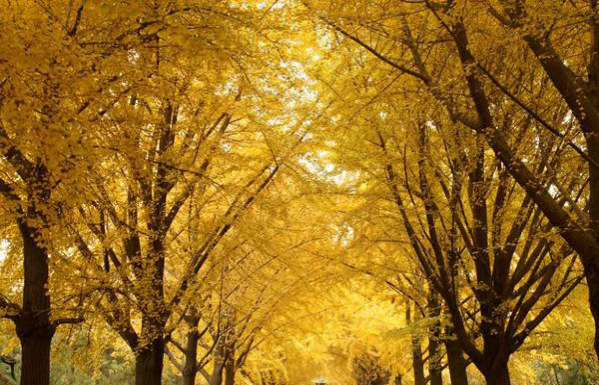
The former residence of the Yongzheng Emperor before he took the throne — his 'Prince Yong mansion.' After his death it was converted into an imperial traveling palace, and in 1744 his son Emperor Qianlong turned it into a Tibetan Buddhist lamasery. The entrance is lined with a ginkgo avenue that turns brilliant gold in autumn, leaves drifting down as you walk — romantic and grand at once. Open 8:00-17:00. Metro Lines 2 and 5 to Yonghegong.
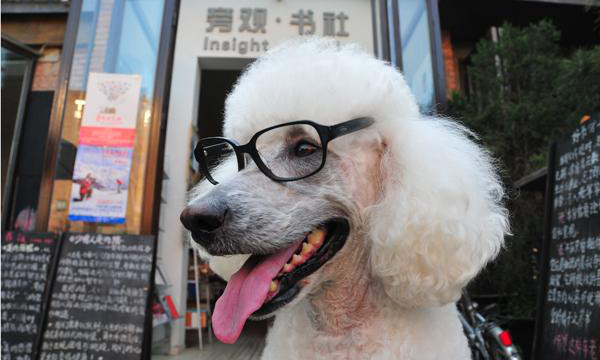
798 Art District
China's most famous and mature art district, born from the decommissioned 798 electronics factory. Over a hundred cultural institutions — galleries, architecture and fashion studios, music and film spaces — now fill the Bauhaus-style halls, with names like publisher Hung Huang and sculptor Li Xiangqun in residence. Exhibitions, talks, and pop-ups run year-round, and some factories still operate, so you drift between art and industry, refinement and grit. No metro on site: take Line 2 to Dongzhimen or Line 13 to Wangjing West, then a short bus ride (401, 420, 405, 909, 955, 991, 988) to Dashanzi Lukou South.
Local Flavors·地道美食
Cosa mangiare a Pechino e dove trovarlo
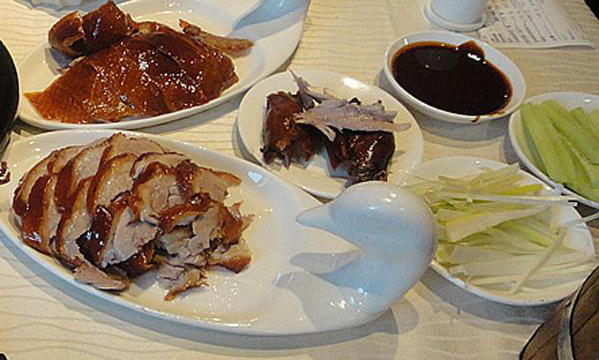
Peking Roast Duck
Beijing's most famous dish — a top-grade Beijing duck roasted over fruit-wood charcoal until the skin is glossy red and the meat rich but never greasy. The name brands are Quanjude (hanging-oven style, since 1864), Bianyifang (the older roasting-oven style), and Dadong, the modern favorite. Carved by a master tableside and served with thin pancakes, scallion, cucumber, and sweet bean sauce.
Old Beijing Instant-Boiled Mutton
Old Beijing's answer to hot pot — paper-thin slices of mutton swished seven-up-eight-down in a charcoal-heated copper pot. The authentic broth is plain water with scallion, garlic, ginger, jujube, and shiitake — no seasoning — paired with a sesame-paste dip. Order matters: tripe first, then meat, then vegetables, finally mixed noodles. Tourists love Donglaishun; locals head to Nanmen Shuanrou or Jubaoyuan.
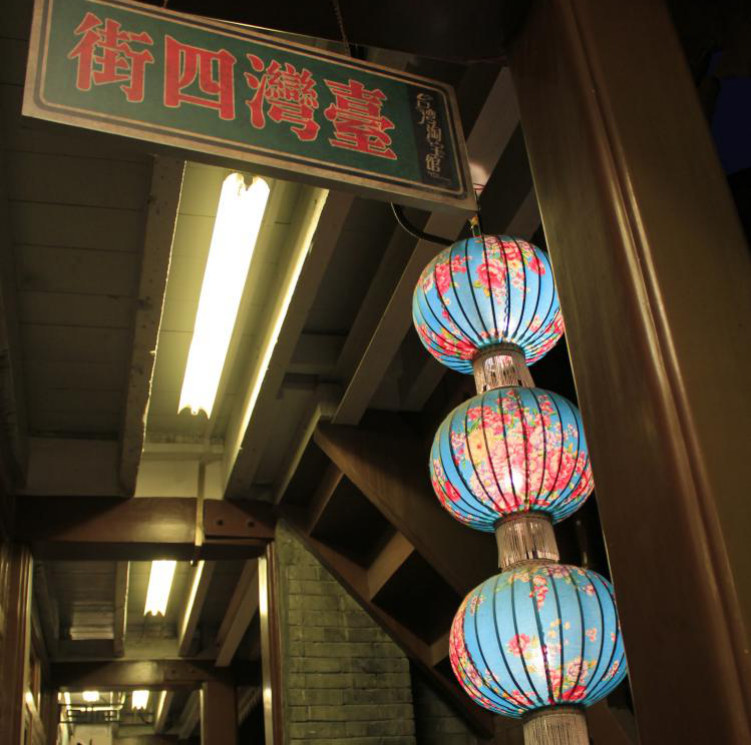
Zhajiangmian (Fried Sauce Noodles)
Beijing's signature noodle dish. The sauce is pork cubes and scallion ginger simmered in yellow soybean paste (huangjiang) or sweet bean paste until deeply savory. Piled high with shredded cucumber, toon leaves, bean sprouts, green and yellow soybeans for crunch. Mix it all together and eat hot — or order the 'crossed-water' cold version for summer. Head to Haiwanju, Jingweizhai, or Siwei Minfu for a proper bowl.
Luzhu Huoshao (Pork Offal Stew)
A hearty working-class classic — fire-baked wheat cakes (huoshao) simmered with pork intestines and pork lungs in a spiced soy broth, so a single bowl covers starch, meat, and soup. Born in the old city's south alleys and still the most authentic taste of street Beijing. Try the legendary Xiaochang Chen on Deshengmen Inner Street (No. 253) for the canonical version.
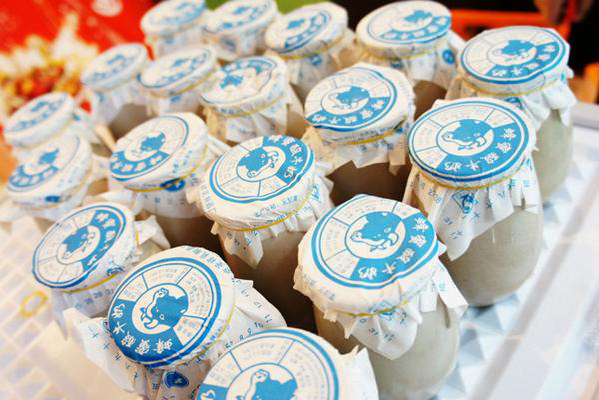
Baodu (Crisp Tripe)
A beloved Beijing snack of paper-thin beef or sheep tripe dunked for seconds in boiling water until crisp and fresh, never oily — locals even swear it soothes the stomach. Always pair it with a couple of ounces of baijiu and two sesame flatbreads fresh from the oven, a small feast in itself. For the real thing, head to Baodu Feng on Qianmen's Menkuang Hutong (Langfang Er-tiao No. 56).
Chaogan (Beijing Liver Stew)
Don't let the name fool you — 'stir-fried liver' is in fact slowly simmered pork liver and intestines, thickened with starch into a glossy, savory gravy you scoop up from a bowl without chopsticks. A classic Beijing breakfast at hole-in-the-wall shops, with Tianxing Ju in the south city as the most famous name. Yaoji Chaogan at Dongzhimennei (Beixinqiao crossing) is the modern pilgrim's choice.
Lvda Gun (Bean-Flour Rolls)
A playful old Beijing dessert: glutinous yellow-millet dough rolled around red-bean paste, then tumbled in roasted soybean flour so it won't dry or crack. The name 'donkey rolling in the dirt' comes from that last tumble. Soft, chewy, never sticky to the teeth — beloved by generations of Beijingers, and a specialty of time-honored shops like Huguosi Snacks and imperial-style Fangshan.
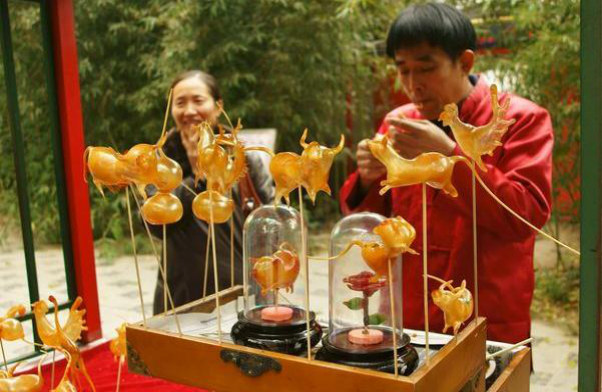
Tanghulu (Candied Hawthorn)
Skewers of hawthorn berries dipped in molten rock sugar that cools into a glossy, crackling shell — the perfect sweet-tart crunch. The classic Beijing street snack, sold from roadside stalls year-round but best in winter when the sugar sets crisp and the haws are at their tart peak. The traditional hawthorn version remains the classic.
Itinerary·推荐行程
Sfrutta al meglio il tuo tempo a Pechino
Giorno 1Imperial Central Axis
- DawnFlag-raising at Tiananmen Square — 36 honor guards march out of the central arch; the time shifts daily with sunrise
- MorningThe Forbidden City — walk the central axis south to north, about 3 hours; feel the scale of Ming-Qing imperial power
- NoonLunch near Jingshan Park, then climb Jingshan for the classic bird's-eye view of golden palace rooftops
- AfternoonWander Nanluoguxiang hutongs — boutique shops, courtyard cafés, and the side alleys where real old Beijing lives
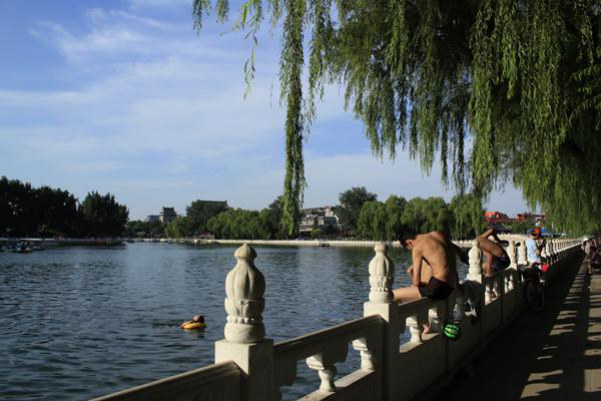
- EveningHouhai (Shichahai) — willow-lined lakes, live-music bars, and the scent of old courtyard Beijing
Giorno 2Great Wall Hero
- MorningMutianyu Great Wall in Huairou — steep, magnificent, and the essence of the Wall; fewer crowds than Badaling
- NoonLunch at the foot of the Great Wall
- AfternoonReturn to the city and hit Wangfujing — the hundred-year 'Number One Street in China' for shopping
- EveningSanlitun for dinner, drinks, and nightlife — the bars, the Village mall, the buzziest night in town
Giorno 3Art & Ancient Temples
- Morning798 Art District — galleries, cafés, and artist studios inside a converted factory complex
- NoonLunch in the 798 complex or a nearby Sanlitun restaurant
- AfternoonLama Temple (Yonghe Gong) — Yongzheng's former mansion turned Tibetan Buddhist temple; don't miss the golden ginkgo avenue in autumn
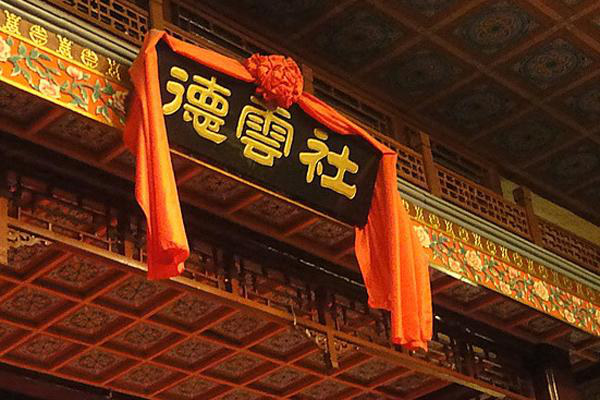
- EveningCrosstalk at Deyunshe, or a Peking Opera show at Liyuan Theater
Giorno 4Royal Gardens & Olympic Night
- MorningSummer Palace — the 728-meter Long Corridor, Kunming Lake, and the Tower of Buddhist Incense on Longevity Hill
- NoonExit via the North Palace Gate, take Metro Line 4 to Yuanmingyuan, lunch near the park
- AfternoonOld Summer Palace (Yuanmingyuan) ruins — see what the 1860 Anglo-French expedition left behind; then stroll the campus of Peking University or Tsinghua next door
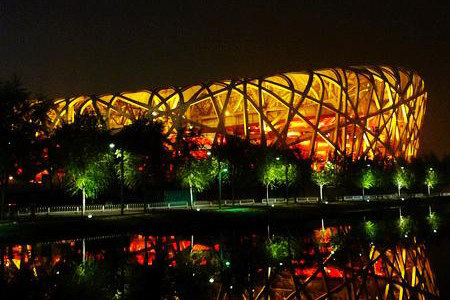
- EveningOlympic Park — the Bird's Nest and Water Cube lit up at night, an eternal Beijing classic
Travel Tips·出行贴士
Da sapere prima di partire
🚄Getting Around
- •Beijing has two civil airports — Capital International has three terminals (T1/T2/T3), so check which one your airline uses before you fly
- •Airport express train ¥25 to Dongzhimen; airport bus ¥16, about 1-1.5 hrs to downtown
- •Five major train stations (Beijing, West, South, North, East) — always double-check which one your ticket is for
- •The metro is the fastest way around and covers all major sights; get a transit card (¥20 deposit) for metro and bus
🏨Where to Stay
- •Wangfujing / Dongdan — central, walkable to the Forbidden City and Tiananmen
- •Houhai / Nanluoguxiang — hutong courtyard hotels and youth hostels, perfect for culture lovers (try Beijing Guyun or Beiping Xiaoyuan)
- •Sanlitun / CBD — modern and international, great dining and nightlife
- •Book 1-2 weeks ahead for peak season (spring, autumn, and national holidays)
💡Good to Know
- •Food inside the Forbidden City is limited to fast-food — bring snacks or eat after your visit
- •The daily flag-raising time at Tiananmen shifts with sunrise — check ahead and arrive early
- •Book Forbidden City and Great Wall tickets online in advance — they sell out fast
- •The Great Wall involves serious climbing and walking — wear comfortable shoes
📌Budget Reference
- •Reference budget: about ¥2,000 per person for a comfortable 5-day trip
- •Beijing is reasonable for a capital — transport is cheap and attraction tickets are mostly ¥10-60
- •Peking duck at Quanjude is about ¥150/person; mid-range restaurants run ¥75-110
- •Snack streets like Gui Jie and Wangfujing offer meals from ¥50-80 per person
Must-Watch Vlogs·必看视频
Video su Pechino scelti tra veri viaggiatori
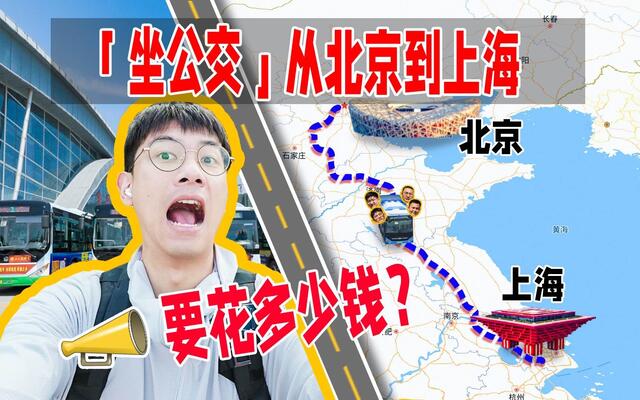 Bilibili12:04
Beijing to Shanghai by Local Bus Only
The ultimate slow-travel challenge: crossing 1,000+ km using local buses only. Costs more than a flight, but the roadside China you see is priceless.
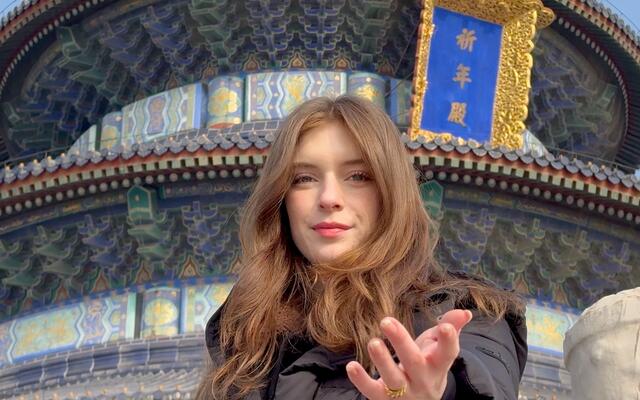 Bilibili8:03
A British Vlogger Survives Beijing Winter
A British creator finds out how cold Beijing really gets — what to wear, what it costs, and whether Harbin is worth adding to a winter trip.
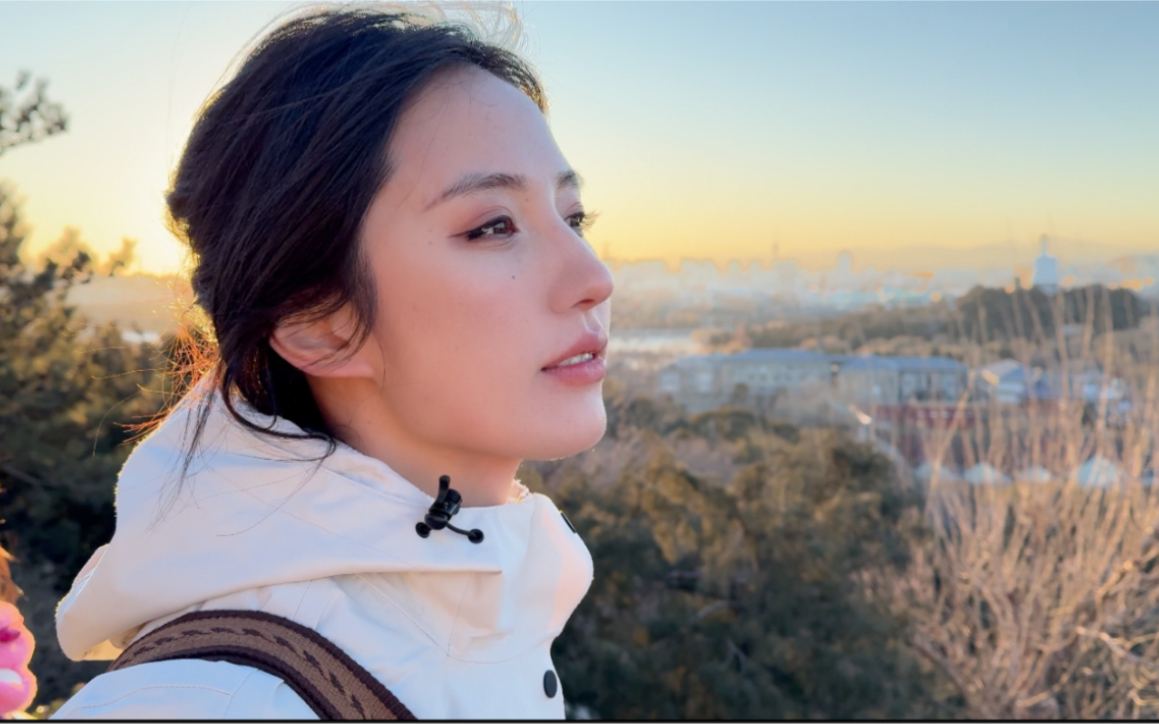 Bilibili11:46
The Best 2 Yuan You Can Spend Sightseeing in Beijing
The "internet footsteps" series walks Beijing to find the best-spent ¥2 of the whole trip — the complete route is pinned in the comments.
 Bilibili12:56
"What Is Even Worth Seeing in Beijing?" — A Local Vlogger Asks
A Beijing-based travel vlogger treats his own city like a foreign destination and explores a 10-km radius. Fresh hutong angles even locals miss.
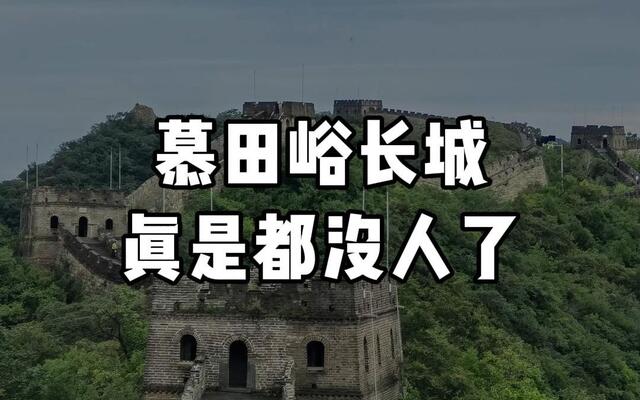 Bilibili8:18
Mutianyu: The Great Wall Section Foreigners Love
A focused case for Mutianyu over crowded Badaling — restored wall, cable car, far fewer people. Matches what every expat recommends, with transport and ticket details.
 Bilibili4:03
Every Ride at Universal Beijing in One Spring Festival Day
A dad and son attempt every ride at Universal Studios Beijing during Spring Festival peak — a realistic pacing plan for the busiest season.
Curated Guides·精选攻略导航
Risorse selezionate su Pechino da tutto il web
Written by an expat who actually hosts visiting friends: Forbidden City day, Great Wall day, temples day — with booking links and timing.
Moments·城市瞬间
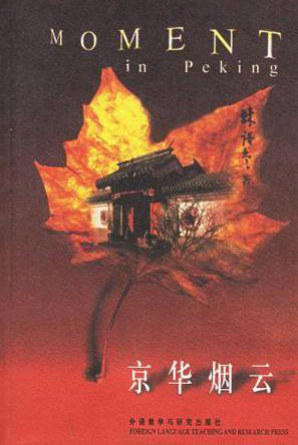
Momenti di Pechino
Local Partners·本地合作伙伴
Guide, autisti e servizi verificati a Pechino
Zhang Wei — Great Wall Photographer
✓ Partner verificatoSunrise shoots at uncrowded Mutianyu watchtowers. 40 edited photos delivered within 48 hours.
Chen Hao — Beijing City & Airport Driver
✓ Partner verificatoBuick GL8, child seats on request. Airport runs, Great Wall transfers, hutong-area hotels.
More Destinations·更多目的地
Nord della Cina